
Section
Commodities
Cocoa, coffee, crude oil, gold, copper, palm oil, natural gas and cotton — prices, production data and what moves them. Africa produces a large share of the world supply of most of these, and the price is the first thing that determines what that is worth.
The numbers
| Commodity | Price | Week | % | Range | Exchange |
|---|---|---|---|---|---|
|
Cocoa
$/tonne
|
4,180 | down -120 | -2.79% | 4,100–4,340 | ICE / LIFFE |
|
Brent Crude Oil
$/barrel
|
60.40 | down -1.20 | -1.95% | 59.80–62.10 | ICE Brent |
|
Gold
$/troy oz
|
3,290 | up +48 | +1.48% | 3,238–3,310 | COMEX |
|
Coffee (Robusta)
$/tonne
|
5,180 | up +90 | +1.77% | 5,050–5,240 | ICE Liffe |
|
Copper
$/tonne
|
9,420 | down -180 | -1.87% | 9,380–9,680 | LME |
|
Palm Oil
$/tonne
|
940.00 | up +22.00 | +2.40% | 905.00–960.00 | CME / Bursa Malaysia |
|
Natural Gas
$/MMBtu
|
10.80 | up +0.40 | +3.85% | 10.20–11.10 | TTF (Europe) |
|
Cotton
¢/lb
|
68.40 | down -1.20 | -1.72% | 67.80–70.20 | ICE |
Analysis

Kenyan Court Blocks Vodacom's $2.1bn Safaricom Stake Sale, Shares
A Kenyan court has struck down Vodacom's $2.1bn Safaricom stake purchase, reopening a long-running legal battle over the deal.

TotalEnergies Commits $10 Billion to Angola as It Bets on Deepwater
TotalEnergies has pledged $10 billion for Angola oil projects over five years — a major signal of confidence in African upstream energy.
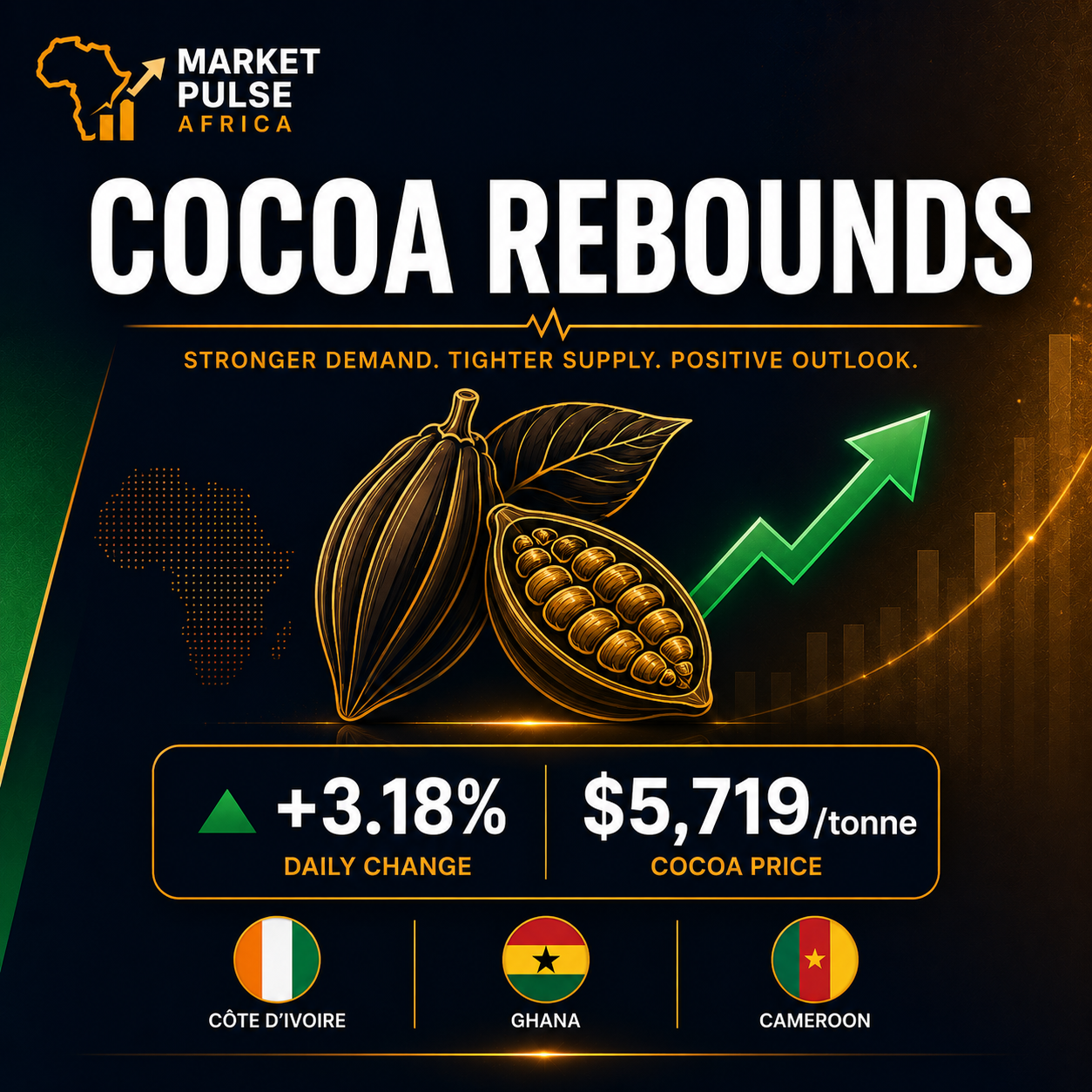
Cocoa Rebounds: What Higher Prices Mean for West and Central African Producers
Cocoa prices climbed around 3.18% to approximately $5,719 per tonne, bringing fresh attention to the economic impact on West and Central Africa's major producing countries. But the key question is not simply whether cocoa prices are rising — it is who ultimately captures the gains.
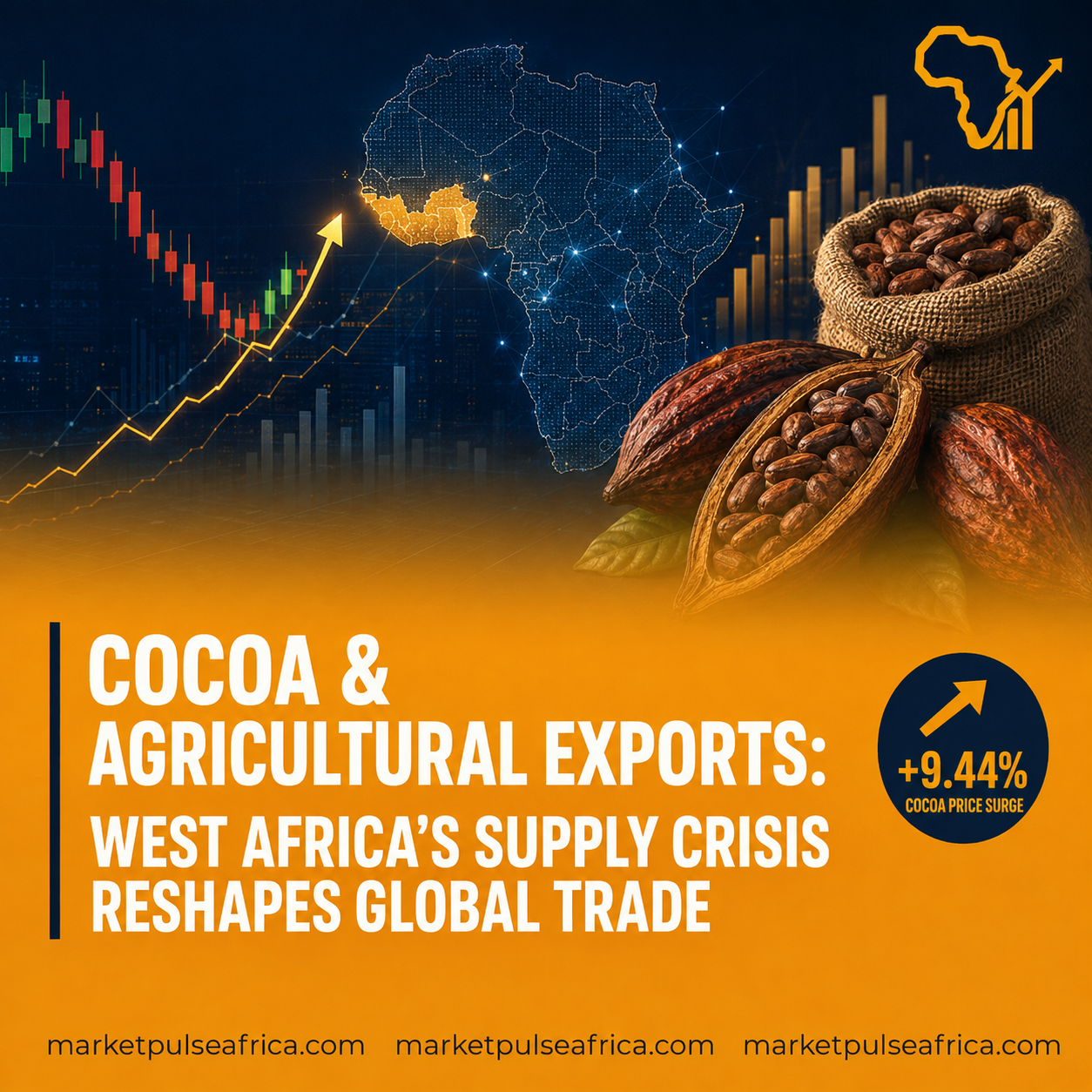
Cocoa & Agricultural Exports: West Africa's Supply Crisis Reshapes Global Trade
Cocoa prices surged 9.44% after Ghana projected lower production for the 2026/27 season, raising fresh concerns over global supply. The developing supply crisis in West Africa is increasing pressure on manufacturers, exporters and agricultural supply chains.

African Commodities Focus: Oil Falls, Gold Holds and Cocoa Surges
African commodity markets moved sharply in early August as Brent crude fell 5.26%, gold remained above $4,000 per ounce and cocoa surged 9.44%. The contrasting moves highlight the growing importance of commodity prices for African exports, currencies and fiscal revenues
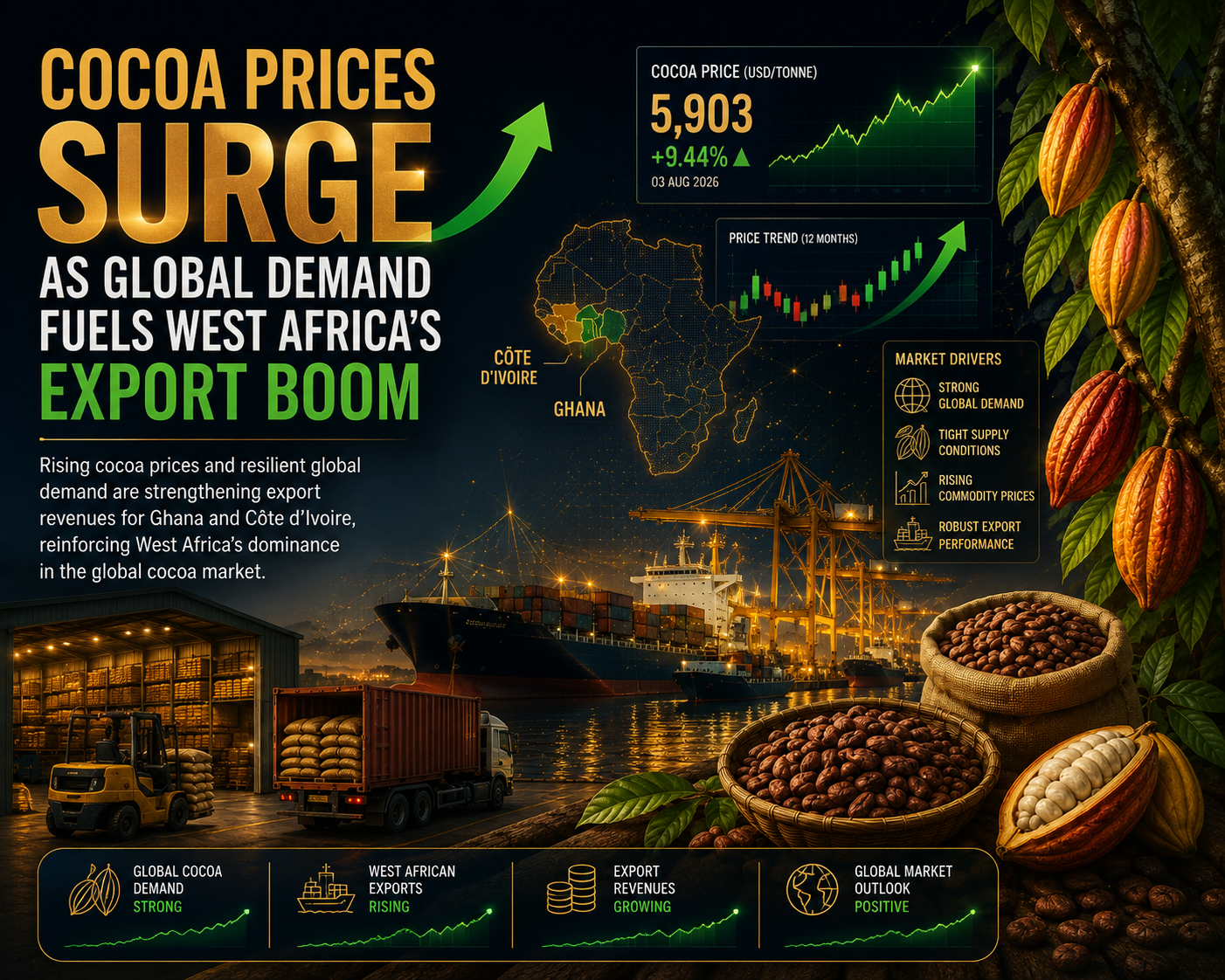
Cocoa & Agricultural Exports: West Africa's Supply Crisis Reshapes Global Trade
Cocoa prices surged nearly 10% after Ghana projected lower production for the 2026/27 season, raising fresh concerns over global supply. Discover how West Africa's cocoa crisis is reshaping agricultural exports, commodity markets and international trade.

Commodities Focus: Brent Falls, Gold Holds Above $4,000, Cocoa Surges on Supply Concerns
Commodity markets took divergent paths in early August 2026 as Brent crude oil tumbled, gold remained resilient above $4,000 per ounce, and cocoa futures rallied sharply on fresh West African supply concerns. Explore the latest price movements and what they mean for African businesses and investors.
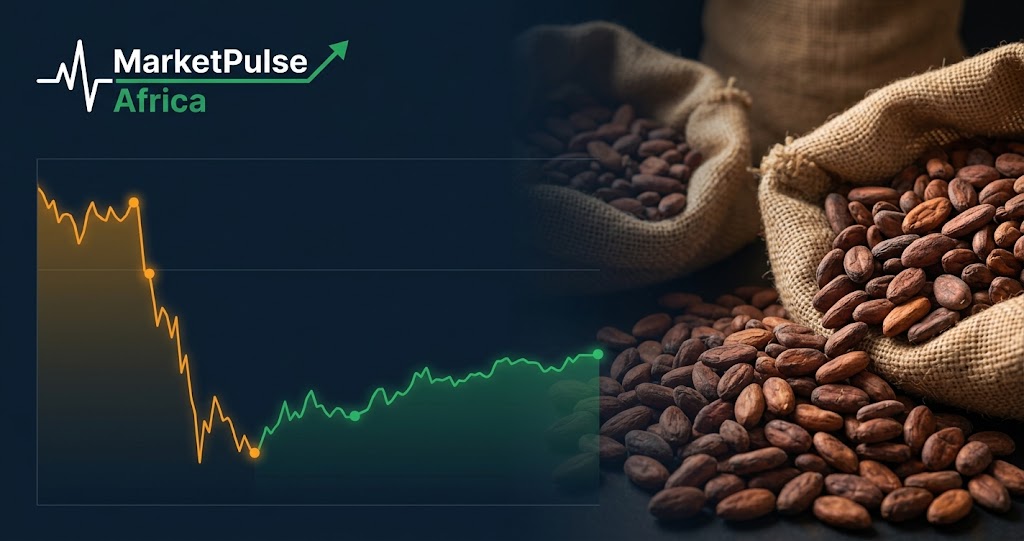
Africa's Cocoa Market After the Price Crash: What $4,000/t Means for Cameroon, Ghana and Côte d'Ivoire
Cocoa futures have stabilized near $4,180 per tonne after a 64% drop from 2024 peaks. Here is how the slump impacts West African state budgets, farmers, and trade.
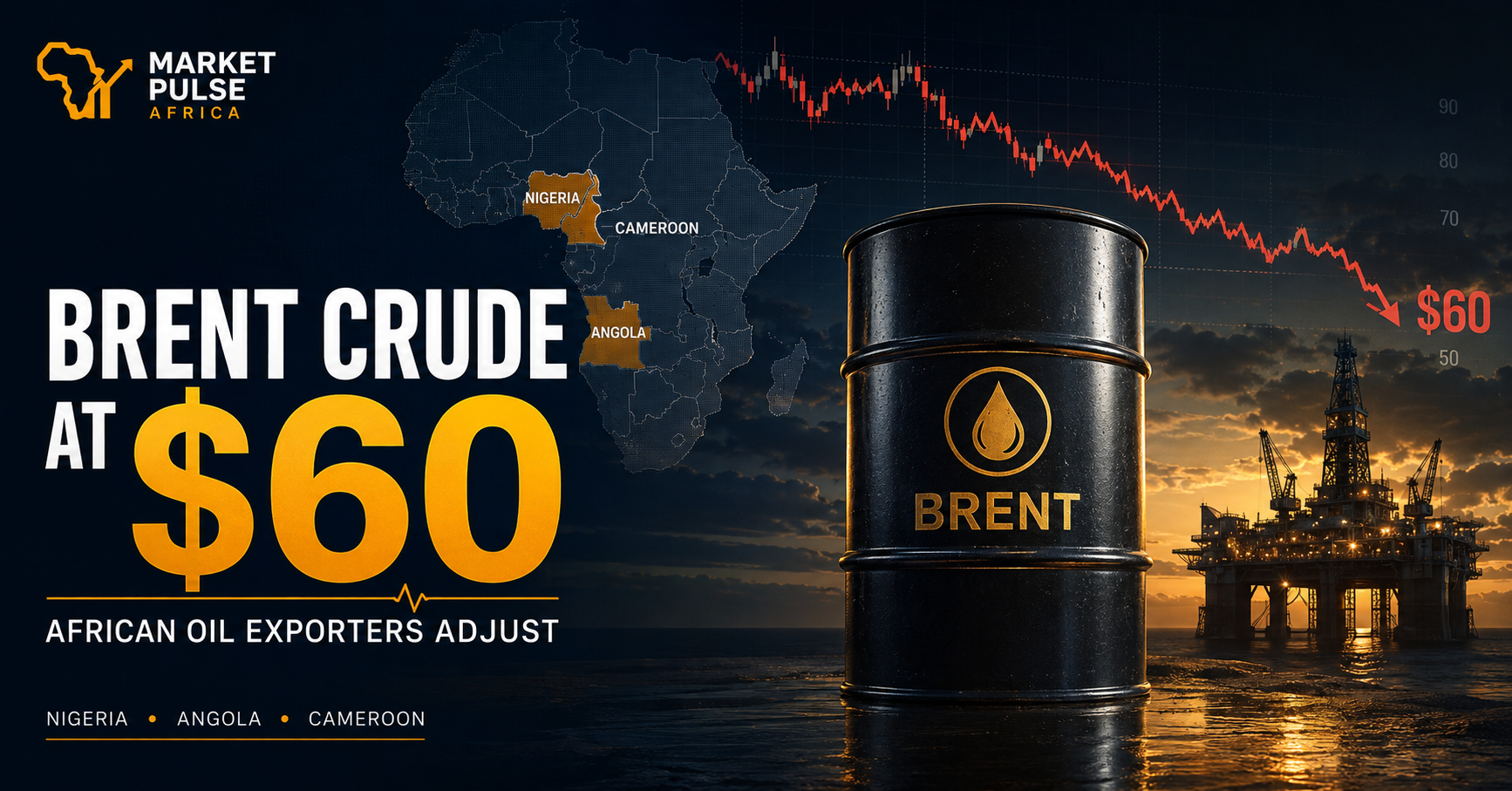
Brent Crude at $60: How African Oil Exporters Are Adjusting to a Lower-Price World
The World Bank projects Brent to average $60 per barrel in 2026 — down from $68 in 2025. For Nigeria, Angola and Cameroon, the budget arithmetic is changing.

Gold at $3,290: How Africa's Gold Producers Are Benefiting From the Sustained Price Rally
Gold has traded above $3,000 per troy ounce for most of 2025 and 2026, sustained by central bank buying and safe-haven demand. For South Africa, Ghana, Mali and Tanzania, that is a substantial transfer.
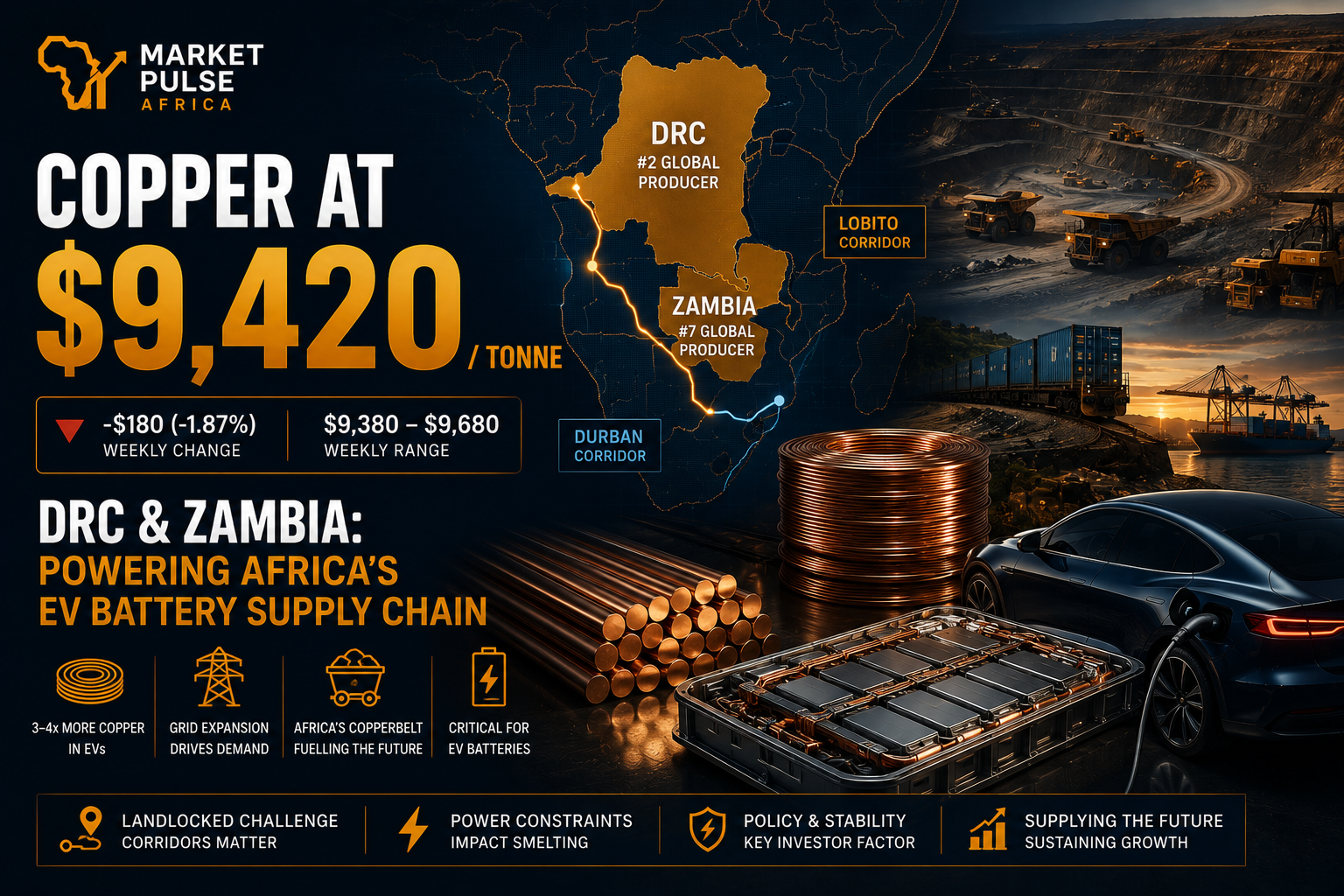
DRC and Zambia's Copper: The Strategic Arithmetic Behind Africa's EV Battery Supply Chain
The Democratic Republic of Congo and Zambia together produce over 12% of global copper — a share that puts them at the centre of the energy transition. At approximately $9,420 a tonne, the economics of African copper are being rewritten.