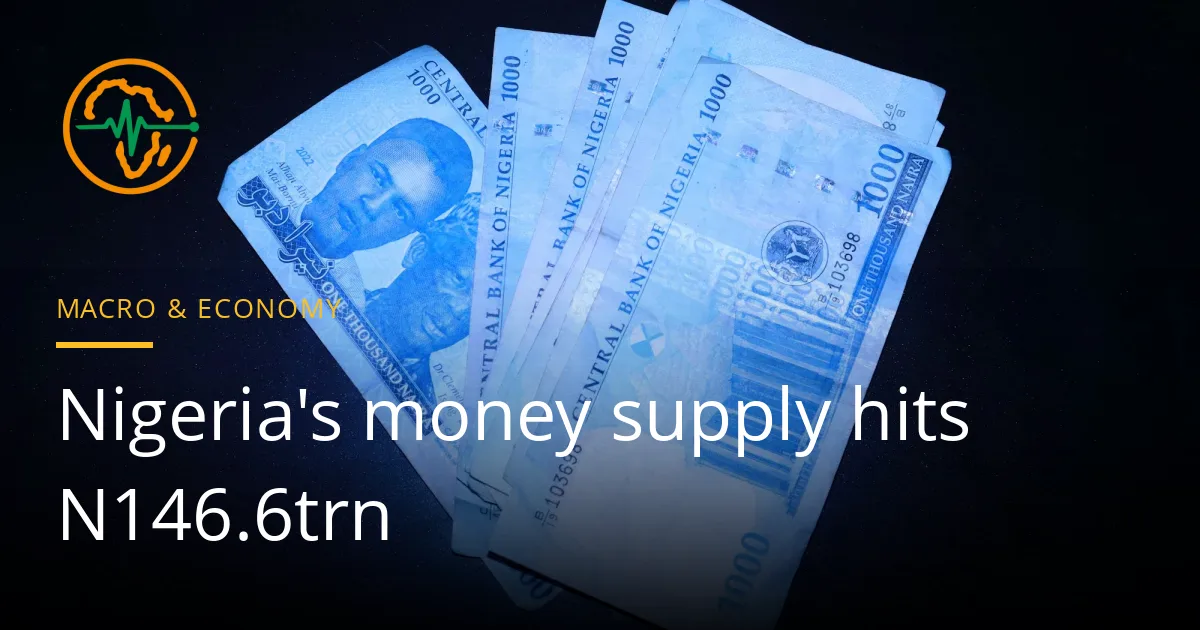
Nigeria 10-Year Bond Yield Climbs to 17.05% as US, Kenya and South Africa Yields Fall
The Nigeria 10-year bond yield rose 46 bps to 17.05% while US, Kenyan and South African yields fell. Here is what the October FGN bond auction tells investors.

The Nigeria 10-year bond yield rose 46 basis points to 17.05% in the week ended 16 October 2026, up from 16.59% a week earlier. Of the seven government bond markets tracked in the Financial Markets Dealers Association (FMDA) weekly report of 19 October, Nigeria's was the only one where the 10-year yield went up.
Nairametrics analyst Kelechi Mgboji set out the comparison on 21 October. The move came in a week when Nigerian banks were flush with cash, which would normally push yields down rather than up.
How the Nigeria 10-year bond yield compares with its peers
According to the FMDA figures reported by Nairametrics, 10-year yields elsewhere fell in the same week:
- Nigeria: up 46 bps to 17.05%
- Kenya: down 6 bps to 12.53%
- South Africa: down 11 bps to 8.86%
- United Kingdom: down 4 bps to 5.40%
- United States: down 17 bps to 5.08%
- Japan: down 8 bps to 2.94%
- China: down 4 bps to 1.64%
The gap between Nigerian and US 10-year paper is now about 1,197 basis points. That spread looks large, but it does not account for naira depreciation, inflation or credit risk, so it is not a measure of the return a foreign investor would actually earn.
Cash in the system, yet yields rose
Banking system liquidity rose 69.39% to N6.28 trillion during the week, the FMDA said, helped by N2.41 trillion of maturing Open Market Operation (OMO) bills. We looked at how much of that cash banks were parking with the central bank in our report on bank deposits at the CBN topping N6 trillion.
Despite that liquidity, the average yield on FGN bonds rose 32 bps to 16.43%, and the average Treasury bill yield rose 7 bps to 18.23%. The reason is the supply side: the Debt Management Office (DMO) is borrowing heavily, and it is accepting higher rates to do it.
The 19 October bond auction
The DMO's October auction, held on 19 October, showed the government paying more than a month earlier. Figures from the auction results, as reported by Nairametrics:
- N1.75 trillion offered across three reopened bonds (February 2034, September 2036 and June 2038).
- Competitive allotments of N1.22 trillion, about 63.5% more than September's N748.64 billion.
- N800 billion of non-competitive allotments on top, for a total of about N2.02 trillion. Some reports put the total at N2.2 trillion; the line items add up to N2.02 trillion.
- September 2036 bond: stop rate up 50 bps to 17.29% from 16.79%.
- June 2038 bond: stop rate up 34 bps to 17.19% from 16.85%.
- February 2034 bond: undersubscribed, with bids of N304.08 billion against N500 billion offered. It cleared at 16.99%.
The DMO rejected roughly N523.58 billion of bids, about 30% of the total, which shows it still refused the most expensive offers. Bid rates on the 2034 paper ran as high as 19%.
Treasury bills tell the same story. At the 14 October auction, the one-year stop rate rose to 15.90% from 15.85%, its first increase since August. The DMO allotted N220 billion out of N982.21 billion in subscriptions.
Why this matters after the CBN rate cut
The Central Bank of Nigeria's Monetary Policy Committee cut the monetary policy rate by 350 bps to 23% on 22 September, its biggest cut since 2006. A cut of that size is usually followed by lower yields across the curve. Instead, long-dated yields have started to climb again.
Two forces are pulling in opposite directions:
- Government borrowing needs. The October auction is part of a N5.75 trillion bond programme for the fourth quarter. More supply means investors can demand a higher return.
- Liquidity and lower policy rates. Large OMO maturities and the rate cut leave banks and pension funds with cash to place, which supports demand for bonds.
So far in October, supply is winning. The June 2038 bond shows the pattern: its stop rate was 18.40% in July, 17.79% in August and 16.85% in September before rising to 17.19% this month. It is still 60 bps below August, so the rally has paused rather than reversed.
What to watch next
- 16 November and 14 December: the DMO plans bond auctions of about N2 trillion each. Stop rates at those sales will show whether it keeps accepting higher yields.
- Inflation data: September headline inflation was 14.63%. A real yield near 2.4 percentage points on 10-year paper keeps Nigerian bonds attractive to local investors if inflation keeps easing.
- The naira: foreign buyers will weigh the yield against currency risk. A stable naira makes the spread over US Treasuries more meaningful.
- CBN liquidity operations: fresh OMO sales would drain cash and could push yields higher still.
For investors, higher stop rates mean better entry levels on long-dated FGN bonds than a month ago. For the government, they mean a higher interest bill at a time when debt service already takes a large share of revenue.
Sources: FMDA weekly market report (19 October 2026), DMO auction results (19 October 2026), Nairametrics reports of 20 and 21 October 2026, CBN.