Nigerian Banks Park N6 Trillion at the CBN After N2.4 Trillion OMO Repayment
Nigerian banks' CBN deposits topped N6 trillion after a N2.41trn OMO repayment, as the DMO rejected about 74% of bids at its latest Treasury bill auction.
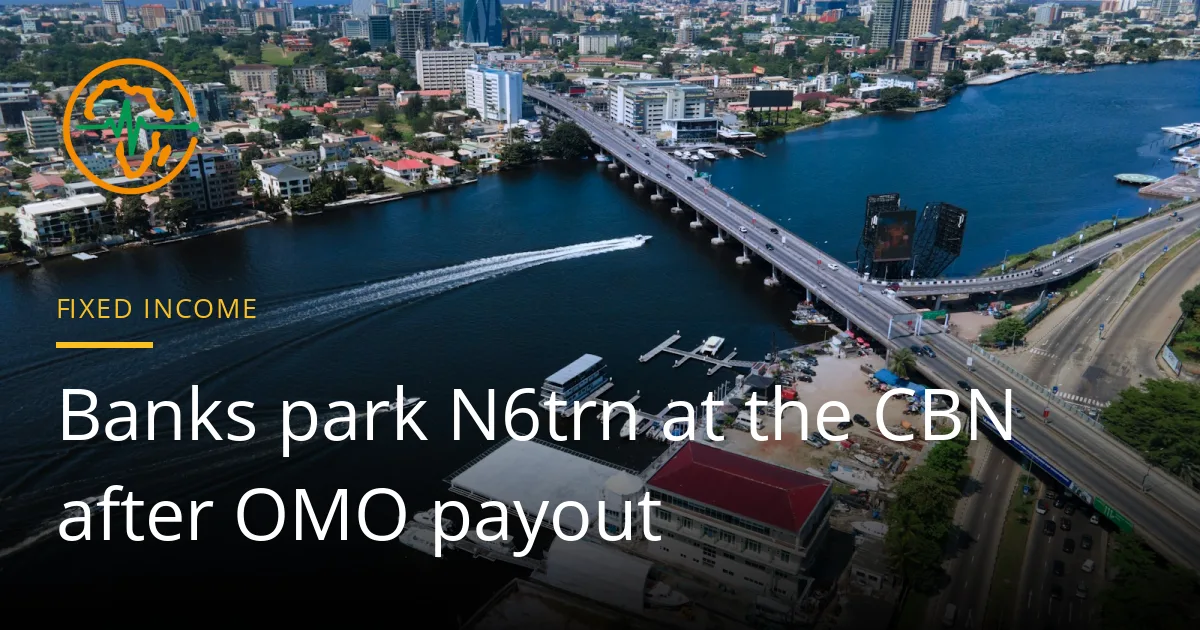
Nigerian banks are sitting on more spare cash than they can lend or invest. Their net placements at the Central Bank of Nigeria's Standing Deposit Facility (SDF) climbed above N6 trillion last week, after the CBN repaid N2.41 trillion of maturing open market operation (OMO) bills. The jump in banks' CBN deposits came in a single day and held for the rest of the week.
The figures come from the CBN's daily banking system liquidity reports for October 13 to 16, compiled by Nairametrics analyst Kelechi Mgboji.
How banks' CBN deposits moved, day by day
- Monday, October 13: net SDF placements stood at about N3.86 trillion. The CBN repaid N2.408 trillion of OMO bills that day, the only OMO repayment of the week, and sold no new OMO bills.
- Tuesday, October 14: placements rose about N2.21 trillion, or 57.18%, to N6.065 trillion.
- Wednesday, October 15: they slipped N20.76 billion to N6.044 trillion.
- Thursday, October 16: they rose N38.70 billion to N6.083 trillion, the highest reading in the series.
Across the four days, net SDF activity rose N2.22 trillion, or 57.65%. Banks did not use the CBN's Standing Lending Facility in that period, a sign that they were lending to the central bank rather than borrowing from it.
The Treasury bill auction that soaked up little
One reason the cash stayed at the CBN is that the government did not take much of it. At the October 14 Treasury bill auction, investors put in bids worth about N1.032 trillion. The Debt Management Office allotted only N269.06 billion and rejected roughly 74% of what was offered.
Those bills settled on October 15. Against N109.96 billion of primary-market repayments, the auction absorbed a net N159.10 billion. Taken with the OMO maturity, the net release of liquidity from securities came to about N2.25 trillion.
That figure is close to the N2.22 trillion rise in SDF placements. Nairametrics cautions that the match does not prove the same naira moved from one to the other. Still, the timing points the same way: money that came back to banks from maturing CBN bills was parked straight back with the CBN.
Opening balances barely moved
Banks' opening balances at the CBN told a quieter story. They were N195.08 billion on October 13, N234.89 billion on October 14, N199.41 billion on October 15 and N198.32 billion on October 16. The net change over the week was about N3.24 billion, or 1.66%. The surplus cash was not sitting idle in current accounts; it went into the deposit window.
Why a N6 trillion surplus matters for markets
A large pile of idle bank cash usually pushes short-term yields down. Banks with money to place compete for the limited supply of Treasury bills, and a DMO that rejects most bids is telling the market it does not need to borrow at the rates on offer.
For the naira, excess liquidity is a double-edged signal. Cash parked at the CBN is cash not chasing dollars. If the central bank chooses to mop it up with fresh OMO sales, rates could firm again.
The backdrop is an easing cycle. Nigeria's headline inflation slowed to 14.63% in September, as we covered in our inflation report, and the CBN cut its monetary policy rate from 26.5% to 23% in September. Lower inflation and a lower policy rate leave less reason for banks to hold out for high yields, which a surplus of this size makes harder to get anyway.
What it means for savers and borrowers
- Savers and money market funds: heavy liquidity and rejected bids at auctions tend to drag down returns on Treasury bills and money market products over the following weeks.
- Borrowers: banks have the cash to lend. Whether they do depends on credit risk and on how much the CBN's deposit window pays compared with loans.
- Bond investors: watch whether the CBN returns with large OMO sales. A big sale would be the clearest sign that it wants to drain this cash and support the naira.
What to watch this week
Three things will show whether the surplus lasts: the size of any new OMO auctions, the DMO's next Treasury bill allotment against subscriptions, and the daily SDF figures. If placements stay above N6 trillion while bids keep being rejected, short-term rates have further room to fall. A large OMO sale would reverse that quickly.